

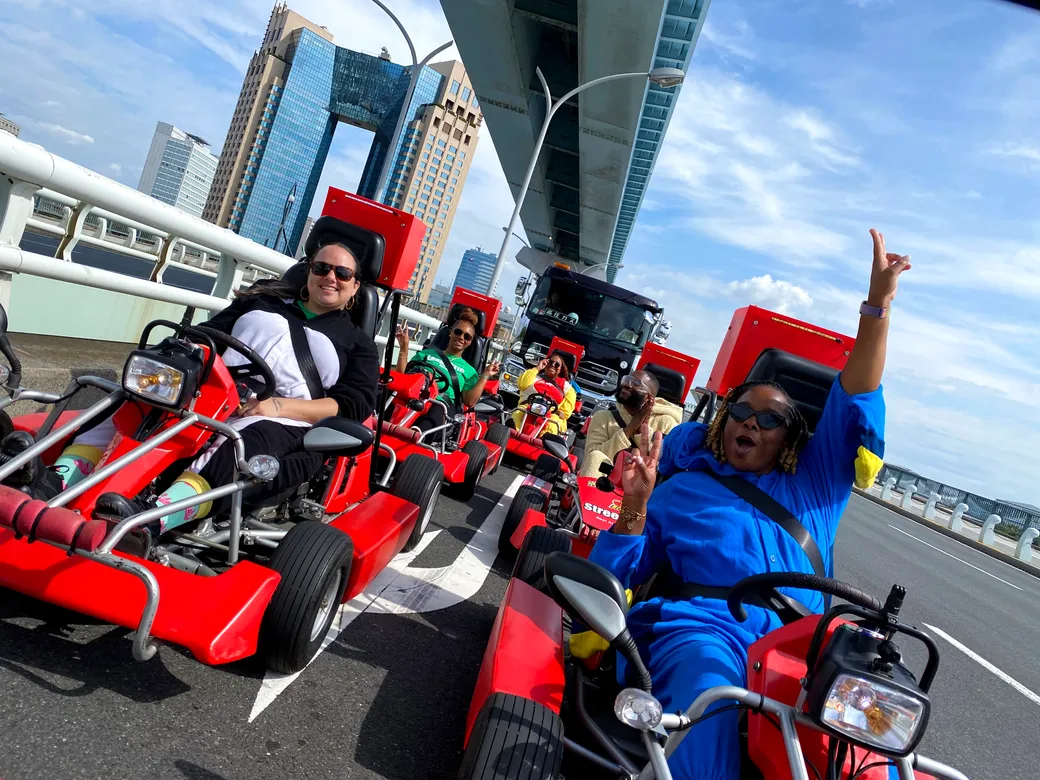
Experience Tokyo’s Night Views Up Close — Street Kart as a Way to Turn Getting Around into Part of the Journey
Tokyo at night reveals a completely different face from the daytime. The glow of main street lighting, reflections dancing off building glass, the flow of people gathering at intersections, and the distinct rhythm each neighborhood carries. While viewing the night scenery from observation decks or restaurants has its own charm, there’s something uniquely exciting about chasing the shifting scenery while feeling the city’s air around you.
That’s where street kart comes in — an experience that lets you take in Tokyo’s streetscape while driving along public roads. Street kart is a public road go-kart activity offered within Japan, and it’s a solid option for anyone who wants to feel Tokyo in three dimensions as part of their sightseeing. Official details are available at kart.st.
When planning a Tokyo trip around night views, most people focus on “where to see them.” But Tokyo’s appeal doesn’t begin and end at a single breathtaking viewpoint. Shibuya, where energy is compressed into every block. Omotesando, where the streetscape feels curated and refined. The waterfront areas downtown, where the sense of scale is striking. Even during short stretches of travel, the density of scenery shifts dramatically. What makes the street kart experience special is that you get to savor this “process of scenery constantly changing” as an unbroken, continuous ride.
Why Creating “Experience-Based” Time Matters for Nighttime Tokyo Sightseeing
On a Tokyo trip, cramming in too many destinations tends to reduce travel time to just a means of getting from A to B. Trains are efficient, but with underground stretches and transfers, it can be hard to feel the connections between neighborhoods. Taxis are comfortable, but you end up as a passive viewer, and your memory of the route becomes a series of disconnected dots.
With a street kart experience, on the other hand, you get the sensation of plunging right into the heart of the city. Tokyo at night becomes something you didn’t just “see” but “drove through.” This affects not only what shows up in your photos but how the trip lives on in your memory. It’s not just the moment of arriving somewhere — the width of the roads leading there, the color of the lights, the way buildings come into view, the changing flow of pedestrians — all of it becomes one continuous experience.
Even when night views are the main goal, this continuity adds tremendous value. High-altitude observation points are great for capturing the big picture, but the temperature of the streets and the way light looks from near ground level — those things you only discover by moving through them at street level. For anyone who wants a more multifaceted understanding of Tokyo’s night scenery, a public road driving experience is a natural fit.
Why Street Kart Works So Well with Nighttime Tokyo Sightseeing
Street kart pairs well with nighttime sightseeing not simply because “you get to ride something.” It’s because the low vantage point, the open-air feeling of wind against you, and the way each road presents a different urban staging all shape how the night views come across.
Take the Shibuya area, for example. Intersections, hillside streets, commercial lighting, and pedestrian traffic create an incredibly dynamic urban landscape. At night, signs and shop lights layer on top of each other, giving the same roads a completely different impression from daytime. In areas like this, moving along a route rather than watching from a fixed spot makes the neighborhood’s personality much easier to grasp.
The official site introduces the Shibuya course as covering areas from central Shibuya through Dogenzaka, the Shibuya Scramble Crossing, Omotesando, and Harajuku. From a night-view perspective, this is a fascinating lineup. The urban density of Shibuya, the refined streetscape of Omotesando, and the distinctive cultural vibe of Harajuku all shift within a relatively short timeframe. For anyone who wants to feel the “differences between Tokyo’s nighttime neighborhoods,” a route like this tends to leave a lasting impression.
The Tokyo Bay area courses, meanwhile, offer an entirely different sense of scale from the city center. The official guide describes departing from the Tokyo Bay shop, passing through industrial zones, and crossing the Rainbow Bridge. Apart from the glamour of central urban areas, the waterfront has its own unique night scenery — bridges, wide roads, and open sightlines. The close-range enjoyment of city lights around Shibuya and the broader sense of the city’s silhouette along the bay offer distinctly different viewing experiences. For anyone who wants to see Tokyo’s night views not as one type but as multiple expressions, this is a worthwhile comparison point.
Key Points Travelers Should Check in Advance
When considering a street kart experience, it’s important to check participation requirements ahead of time — not just the appeal of the scenery and routes. For travelers coming from overseas, license-related preparations are the top priority.
Official license information is available at https://kart.st/en/license. According to the guide, driving on Japanese public roads requires documentation that varies by situation: a valid Japanese driver’s license, an international driving permit, a SOFA license for US military personnel stationed in Japan, or for certain countries and regions, a home country license with an authorized Japanese translation. Which documents are accepted depends on your country of origin and residency status, so checking before booking — or even before your trip — is essential.
Particularly important: original documents are required, and if the conditions aren’t met, participation may not be possible. The official site also notes that digital driver’s licenses are not valid in Japan and that required documents differ by country. The closer your travel dates, the more important it is to verify conditions through official channels rather than making assumptions.
While the focus naturally gravitates toward night views and sightseeing experiences, street kart is a public road activity. Carefully confirming pre-participation requirements helps everything go smoothly on the day. Even when introducing this as a tourism article, including these practical details alongside the exciting parts is genuinely helpful for readers.
The Appeal of Street Kart as a Night-View Experience
There are several ways to enjoy night views. The classics include observation decks, restaurants, hotel lounges, riverside walks, and cruises. Each has its own appeal, but what sets street kart apart is that beyond “viewing the night scenery,” it adds the element of “moving through the flow of the city.”
Walking limits how much scenery you can take in during a single evening due to distance and time constraints. Trains cover ground quickly but make it harder to feel the continuity between neighborhoods. Street kart can be understood as an experience that sits between the two. Rather than dividing your time destination by destination, it lets you fold the journey itself into your sightseeing.
Tokyo at night is also a city where the atmosphere shifts fascinatingly from street to street — not just in brightness but in character. Main roads offer open, expansive views. Smaller streets bring signs and city sounds up close. Hills reward you with downward views and shifting perspectives. These differences are hard to pick up when you stay in one spot. Experiencing them while on the move helps you understand Tokyo as a city spread across an entire surface, not just a collection of points.
For travelers who care about photo-worthy moments, a street kart experience is also worth considering. Of course, you’ll need to follow photography rules and operational guidelines, but the time spent within the city itself carries a special quality that tends to become a highlight of any itinerary. Whether it catches attention on social media depends on content and timing, but as an activity that combines quintessentially Tokyo urban scenery with an experiential element, it undeniably carries visual impact.
The Neighborhood You Choose Changes the Entire Impression
If you’re considering street kart for the night views, sorting out which type of neighborhood impression you’re after first makes the decision easier.
Those drawn to the Shibuya area are often looking for quintessential Tokyo energy and densely packed streetscapes. Dogenzaka, the Scramble Crossing, Omotesando, and Harajuku each look different at night. Shibuya puts the city’s momentum front and center, Omotesando tends to leave impressions of refined streets and sophisticated atmosphere, and Harajuku radiates its own cultural character. For anyone who wants to feel multiple neighborhood personalities within a single course, this kind of route composition is compelling.
On the other hand, those attracted to the Tokyo Bay area may want to enjoy the expansiveness and infrastructure scenery that differs from the city center. Crossing bridges, the spacious feel unique to the waterfront, and dynamic views that include industrial zones all carry a different appeal from central commercial district night views. This option may suit people who want to sense the structure of the city itself rather than its commercial glamour.
When presenting this to readers, it’s important not to lump everything under “Tokyo night views” but to articulate what type of scenery is being discussed. This way, readers can judge whether it matches their travel style. Night-view preferences vary from person to person — romantic, glamorous, tranquil, or dramatic. One of street kart’s appeals is that you can think through these differences right at the route-selection stage.
Is It Easy to Work into a First-Time Tokyo Trip?
For first-time Tokyo visitors, the sheer number of destinations is both exciting and potentially overwhelming. The more tourist spots you try to squeeze in, the more time goes to transit, and individual experiences can start to feel shallow. In those situations, an activity like street kart — where movement, scenery, and memorable experiences merge into one — is relatively easy to position within an itinerary.
For example, spending the daytime at museums or shopping, then shifting to an experiential activity as the city’s atmosphere transforms in the evening, is a natural fit. Tokyo’s streets change visually at night, so even places you visited during the day can feel completely different. A flow where daytime sightseeing impressions get revisited from a different angle during a nighttime public road drive also works beautifully.
Beyond simply visiting famous landmarks, the fact that this experience tends to stick in your memory as “the kind of time I spent in Tokyo” shouldn’t be overlooked. Trip satisfaction isn’t determined solely by the number of landmarks in your photos — it’s also shaped by what you felt in the moment. Because street kart gives you the sensation of actively moving through Tokyo as a city, there’s good reason it gets considered as a highlight candidate for any trip.
Expression Standards to Keep in Mind
When introducing the street kart experience, calibrating the tone of your language matters. Tourism-oriented content tends to lean heavily on building excitement, but it’s important to avoid definitive claims or exaggerations and instead present information in a way that lets readers make their own judgments.
For instance, rather than flatly stating “you don’t need to worry about language barriers,” a phrase like “checking the guidance information in advance can help ease concerns” is more appropriate. Readers’ language abilities and travel experience vary, and the same feeling won’t apply to everyone. Similarly for directions — rather than declaring “you won’t get lost,” framing it as “confirming the meeting point and required documents beforehand makes things go more smoothly” is more objective.
The same goes for night views. Instead of writing “you’re guaranteed to encounter beautiful scenery,” saying “depending on the time and route, you may encounter impressive views” keeps the description closer to reality. Far from weakening the article’s persuasiveness, this actually builds trust. Tourism articles aren’t read for hype alone — what matters is whether readers can actually use them for trip planning.
On this topic as well, there’s no need to oversell the street kart experience. Positioning it as one of several ways to enjoy Tokyo’s night views, and calmly showing who it’s best suited for, what to check beforehand, and what kind of city scenery to expect — that’s the right approach.
Practical Checklist Before Booking
When you’re at the stage of seriously considering this, it helps to check practical details beyond just the sensory appeal.
-
Check course details on the official site
Start at https://kart.st/ to review the available area guides. Whether you prioritize the urban scenery around Shibuya or the expansive views of the Tokyo Bay area will shape your impression. Even if an article sparked your interest, the final decision should be based on reviewing the official information. -
Verify license and document requirements early
License requirements can be checked at https://kart.st/en/license. Since required documents vary by country of origin and license type, it’s practical to check at the planning stage rather than right before the trip. -
Plan around your booking date
If you want to enjoy night views, avoid over-scheduling the hours before and after so you can take in the city’s atmosphere at a relaxed pace. The late afternoon to evening window is when Tokyo shifts into a different impression from daytime, so it’s worth balancing this with your surrounding travel and dining plans. -
Confirm what to bring and meeting conditions
Original documents are particularly important. While it’s tempting to leave things at the hotel during a trip, anything needed on the day should be sorted out in advance. Since this is a public road activity, preparation goes beyond just being in a sightseeing mood — confirming requirements is non-negotiable.
From “Seeing” Tokyo’s Night Views to “Driving Through” Them
Tokyo’s night views are captivating enough even from a distance. But if you want to engrave the city’s expressions more deeply into your memory, there’s real value in carving out time to feel the shifting light while moving through the streets. Street kart can be understood as one method for doing exactly that.
On urban courses through areas like Shibuya, Omotesando, and Harajuku, you can feel Tokyo’s density and the refinement of its fashion districts. Along the waterfront, you may encounter views where bridges, wide roads, and the city’s silhouette become easier to take in on a grand scale. Which is better comes down to personal preference, but thinking consciously about the “type of night view” you want makes it easier to find satisfaction.
What matters most is making your decision based on official information, with a clear understanding of participation requirements and routes. A street kart experience can be a strong contender for travelers who want Tokyo’s nights to leave a lasting impression. For those who want to absorb the flow of the city itself as an experience — not just hop between landmarks — it’s worth serious consideration.
Tokyo’s nights hold more than the views you see looking up — there’s scenery that changes as you drive through it. If you want to turn that transformation into a travel memory, check the official site at kart.st and the license guide at https://kart.st/en/license, then consider working a street kart experience into your itinerary. When you design your trip so that the journey between destinations becomes part of the adventure too, Tokyo at night takes on a whole new dimension.
A Note on Costumes
Our shop does not offer rental of Nintendo or Mario Kart-related costumes. We only provide costumes that respect intellectual property rights.
