
Coloring February Valentine’s in Tokyo: Street Kart Adventures and Winter City Fun
February in Tokyo is a season where the crisp, wintry air tends to overlap with the unique character of each neighborhood. As Valentine’s season approaches, areas like Shibuya and Omotesando take on a little extra sparkle in their shop windows and around the cafés, making a stroll through the city center look a bit different from usual. Although there’s a chill in the air, the dry atmosphere keeps visibility clear, so it’s also a time when the outlines of the city and the lights of the night tend to leave a lasting impression.
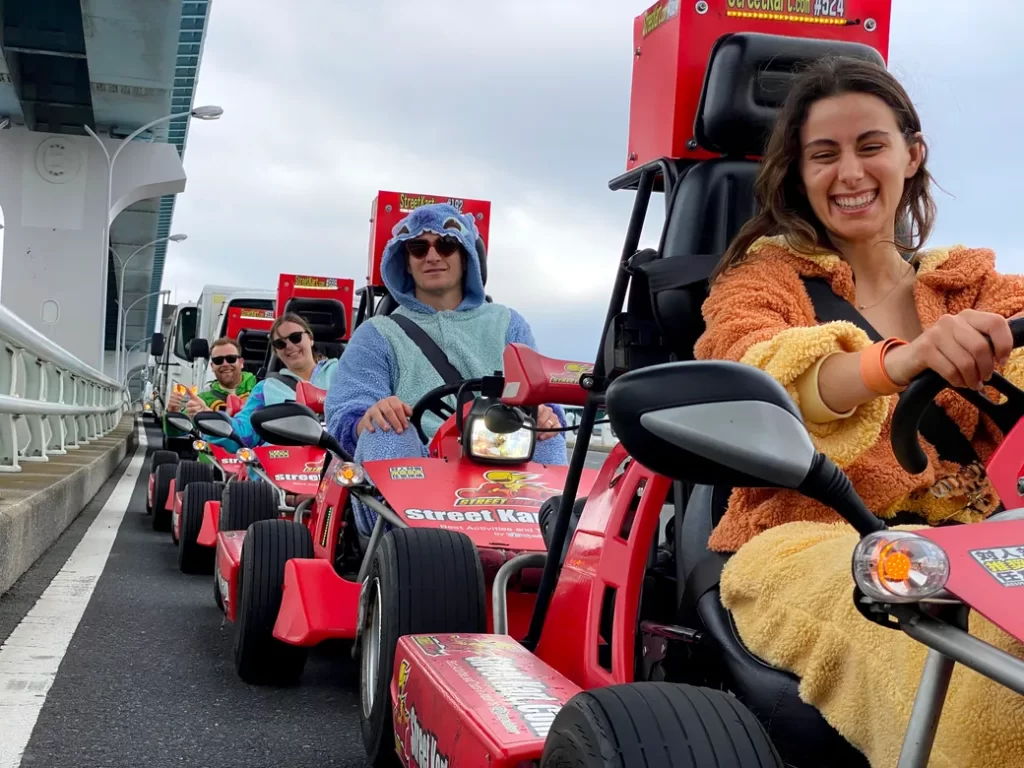
One way to enjoy this wintry Tokyo scenery from a perspective different than walking is a street kart experience. As a tour that runs on public roads, it has the distinctive appeal of letting you take in the scenery as a connected flow while moving along with the rhythm of the city. Rather than visiting tourist spots one by one, it’s an option that’s easy to picture pairing well with February in Tokyo for anyone who wants to feel the chain of roads and the atmosphere of each area as a whole. You can check reservations and the details of each course on the official site, kart.st.
Why February in Tokyo Suits a Valentine’s-Season City Walk
Compared to summer or the rainy season, February in Tokyo has less humidity, and the way the city looks changes clearly between day and night. During the day, sunlight reflects off the glass surfaces of buildings, and from evening onward, the lights of illuminations and signs take on a clear outline. It’s a season when light doesn’t blur, giving you a refined impression.
The sense of the Valentine’s season in Tokyo isn’t limited to specific venues either. Department store and street-level shop displays, the sweets lined up at this time of year, and the flow of people choosing gifts naturally blend into the atmosphere of the city, so in areas like Shibuya, Omotesando, and Ginza, you can easily feel the change of season just by walking around. Even without planning to attend a large-scale event, the whole city takes on a slightly elevated mood, which is a hallmark of this time of year.
What’s more, because there’s a chill in the air, February is also a time when it’s easy to add contrast to how you plan your stays and movements. It’s easy to separate time spent shopping and dining indoors from time spent enjoying the scenery outside, making it easy to slot in an experience that leaves a strong impression even in a short span of time. A street kart experience is the kind of content that’s easy to consider when you want to add some dynamic time to your winter sightseeing in Tokyo.
How a Street Kart Experience Changes Your Perspective on Tokyo Sightseeing
While sightseeing on foot lets you carefully observe buildings, shops, and the fine details of the city’s character, it takes time to physically sense the connections between wide areas. Traveling by train is efficient, but it can be hard to feel the continuity of the streets or the shift in atmosphere. Sitting in between these is the guided street kart experience.
In a street kart experience, the scenery changes continuously within Tokyo’s road environment, so it becomes easier to see “how this neighborhood connects to the next.” The scale of intersections, the spread of main roads, the density of signs and buildings in each area, and the differences in foot traffic all tend to stay in your memory as a single flow. It suits people who want to grasp the city as a surface rather than remembering tourist spots as isolated points.
Also, in a season like February when the air is cold, the lines of the scenery tend to be relatively sharp, so the impressions of bridges, straight roads, and wide intersections tend to linger. Tokyo’s urban landscape is structured so that there’s a lot of information up close, while in the distance the presence of high-rise buildings and towers stands out. The street kart experience is a way of moving that makes it easy to connect and feel both of these in a short amount of time.
The Urban Valentine’s Mood You Feel in the Shibuya Area in February
According to the official site, the Shibuya course is about one hour, guided as a flow that heads from Dogenzaka toward the Shibuya Scramble Crossing, passing through Omotesando and Harajuku before returning. Its distinctive feature is that it packs together areas with the differing characters that represent Tokyo within a short span of time.
In Shibuya, the flow of people itself becomes part of the urban landscape. Large video screens, the crossing, the constantly moving crowds, and the three-dimensional composition of the roads all overlap, making it a place where you can easily feel that quintessential Tokyo density. Because the air tends to be clear in February, the colors of signs and lighting can be seen while keeping their outlines, and the scenes from evening onward take on a sense of the season. During Valentine’s season, the rise in commercial activity and gift demand also overlaps, adding a slightly glamorous air to the whole city.
Moving from there to Omotesando, the impression changes dramatically even within the same city center. The width of the street, the roadside trees, architecture that uses lots of glass surfaces, and the well-ordered facades catch your eye, bringing out a calmness different from Shibuya’s sense of energy. During Valentine’s season, there tends to be a change in how shop windows are presented and in the displays in front of stores, making it an area where you can easily get the impression of a refined winter Tokyo.
Harajuku stands out with a character that connects the two. It’s not as quiet as Omotesando, nor as densely packed as Shibuya, and it’s a town where the colors of culture and fashion tend to come to the fore. By passing through Shibuya, Omotesando, and Harajuku in succession, it becomes easier to truly feel that the center of Tokyo isn’t a single town but is made up of multiple districts with different moods. If you’re looking for a Valentine’s-style urban atmosphere in February Tokyo, this area combination is one that’s easy to picture as a good match.
The Calm and Three-Dimensional Feel of Winter Tokyo, Savored in Asakusa
On the official site, the Asakusa course is guided as content lasting about 45 minutes to one hour, passing in front of Kaminarimon and heading toward the Tokyo Skytree area. The distinctive feature of this course is that traditional scenery and modern scenery are brought into a single flow.
Asakusa is an area within Tokyo where the flow of the city’s time feels somewhat more relaxed. Around Kaminarimon, the form of the gate, the line of sight down the street, and the sense of density at the storefronts are distinctive, and the purposes of the people walking there range widely—sightseeing, worship, and shopping. In the cold February air, the colors of the red gate and the signs tend to look crisp, making it an environment that leaves a lasting impression on travelers who have winter photos in mind.
On the other hand, when the Tokyo Skytree comes into view, the scenery suddenly expands vertically. The switch from the low-rise townscape to the tower stretching high up makes you feel that the old and new of Tokyo coexist within a short distance. Unlike the Shibuya-direction course that runs through the lively city center, the Asakusa course suits people who want to view Tokyo’s sense of history and modernity in contrast.
When it comes to Tokyo during Valentine’s season, the glamorous commercial areas tend to get the attention, but if you want to put together a calmer itinerary, a choice like Asakusa fits well too. Apart from a day centered on shopping and city walking, adding a short street kart experience makes it easier to bring depth to the overall impression of your trip.
The Sense of Winter Openness You Feel at Tokyo Bay
On the official site, the Tokyo Bay course is introduced as a flow lasting about 1.5 to 2 hours, passing through an industrial zone, crossing the Rainbow Bridge toward the Tokyo Tower area, then crossing the bridge again to return. Rather than looking at the fine districts of the city center, it’s a course that makes it easy to take in Tokyo’s sense of scale broadly.
The distinctive feature of Tokyo Bay is that there are many scenes where the sky opens up. In the bayside area, the spacing between buildings is relatively wide, and bridges, the waterfront, logistics zones, and high-rise buildings fit easily into a single view. While February is a time when you tend to feel the chill of the wind, on days when visibility is clear the distant scenery is easy to see, and the outlines of the city center and the presence of the towers tend to stand out clearly.
A route that includes the Rainbow Bridge suits people who want to feel a sense of “expanse” within Tokyo sightseeing. In contrast to courses that show off the personality of towns like Shibuya or Asakusa, Tokyo Bay is distinctive in that your attention tends to turn toward the size and structure of the city. Many people associate Valentine’s season with romantic city-center night views, but even during the bright daytime hours it’s easy to feel the openness of the water and sky, making it an area that’s easy to consider regardless of the season.
License Requirements and Basic Information to Check Before Booking
When considering a street kart experience, the first thing you’ll want to check is the requirements regarding driving qualifications. The official driver’s license guidance page explains that documents needed to legally drive a vehicle in Japan include an International Driving Permit (an IDP based on the 1949 Geneva Convention). Also, depending on your country or region, a combination of your home country’s driver’s license and an official Japanese translation document may be required. We recommend checking the details on the official page, kart.st/en/drivers-license/.
That same page also explains that the required licenses and documents depend not on the nationality on your passport itself, but on the type of license or permit you actually hold. If you don’t check before departing on your trip, you may end up having to rearrange your plans locally, so confirming before booking is practically useful. In particular, because the official site explains that an International Driving Permit cannot be issued within Japan, those to whom this applies will need to prepare before traveling.
In addition, the top page provides contact methods such as phone, various messengers, and an inquiry form. Multiple language displays are also available, so the layout makes it easy to compare and check the content in advance. For reservations or to clarify any questions, it’s best to proceed based on the guidance on the official site, kart.st.
How to Think About Incorporating a Street Kart Experience into February Tokyo
For February sightseeing in Tokyo, keeping the cold in mind while being conscious of how you allocate indoor and outdoor time makes it easier to fine-tune your overall satisfaction. One easy approach to picture is to slot in city walks, shopping, and café visits from morning to midday, and place the street kart experience as an accent for the day. In the Shibuya–Omotesando area it’s easy to connect with shopping and strolling, while in Asakusa it’s easy to combine with downtown sightseeing and walks around temples and shrines.
When it comes to clothing, since there are days in February when Tokyo’s wind feels cold, attire that makes it easy to adjust your body temperature is practical. The official site also advises against heels, sandals, and long skirts. Rather than focusing only on sightseeing photos, balancing ease of movement with protection against the cold makes it easier to reduce the burden on the day itself.
Also, since there’s guidance that course durations vary depending on traffic conditions, it’s reassuring to leave some buffer in the plans before and after. February is also a time when commercial facilities and popular areas tend to get crowded, so rather than cramming in meals and travel, dividing your rounds by theme for each area makes it easier to keep your itinerary organized. For example, you can make a Shibuya-course day center on the Valentine’s-season glamour of the city center, and an Asakusa-course day center on the contrast of Tokyo’s history and scenery—choosing according to your purpose makes it easier to build the big picture.
A Street Kart Experience Seen as a Way to Spend February Valentine’s in Tokyo
When thinking about a February Valentine’s trip in Tokyo, many people first picture elements like chocolate, illuminations, shopping, and café-hopping. Those are, of course, ways to spend the season with a seasonal feel, but if you want the atmosphere of the city itself to leave a lasting impression, there’s also the enjoyment of adding a travel experience. A street kart experience makes it easy to feel the connections between Tokyo’s streets and scenery in a short amount of time, and it’s an activity that’s easy to combine with February’s clear urban landscape.
In Shibuya, you can easily feel a glamorous and dynamic Tokyo, and by including Omotesando and Harajuku, it becomes easier to take in the urban atmosphere of Valentine’s season. In Asakusa, it becomes easier to view the contrast between Tokyo’s history and modernity within the calm winter air. At Tokyo Bay, the expanse of the bridges and the bayside makes it easier to feel a wintry sense of openness. Depending on which area you choose, the impression of February Valentine’s in Tokyo changes significantly.
What you place at the center of your sightseeing is up to each person, but by adding an experience that changes the angle from which you see the city, the way the same Tokyo stays in your memory will change. Before booking, it’s practical to check each course’s content and the license requirements on the official site, and incorporate it in a form that suits your itinerary. For detailed information and the booking route, see kart.st, and to check the license requirements, see kart.st/en/drivers-license/. For those who want to savor February in Tokyo from both a seasonal and a regional perspective, a street kart experience is one option that’s easy to consider.
At our shop, we offer only original costumes that respect intellectual property rights. To ensure you can use our service with peace of mind, we provide costumes within an appropriate scope.
At our shop, we do not rent out Nintendo or “Mario Kart”–related costumes. We offer only costumes that respect intellectual property rights.
About Costumes
At our shop, we do not rent out Nintendo or “Mario Kart”–related costumes. We offer only costumes that respect intellectual property rights.

