

Cruise Tokyo’s Shopping Streets and Markets by Street Kart! A Shopping Guide That Makes Souvenir Hunting Even More Fun
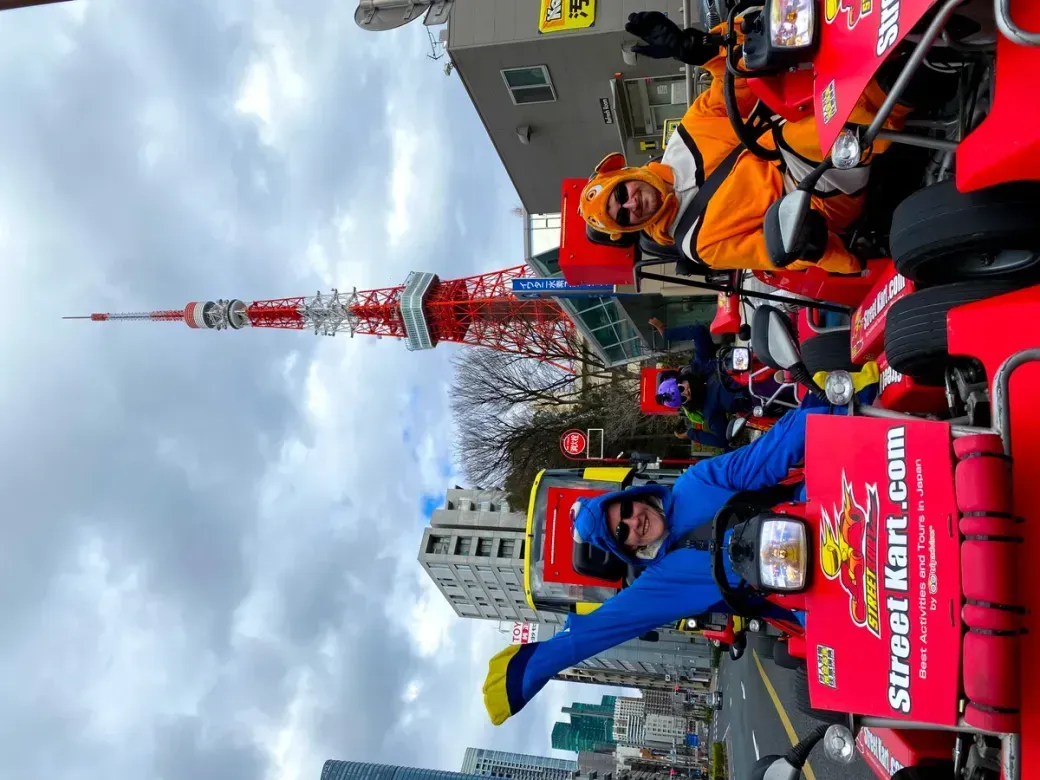
“Tokyo—where should I buy souvenirs?” It’s a question I get all the time whenever friends from back home come to visit. Sure, a department store gift bag is nice, but the things that really stick in your memory are the “so very local” finds you stumble across in Tokyo’s lively shopping streets and markets. And what really gets that shopping spirit going is the experience of zipping through the city on a street kart (a go-kart on public roads). Cruising through Tokyo’s streetscapes alongside a guide, then circling back later to do some serious shopping in the areas that caught your eye—this combination is a perfect match for international visitors.
In this article, I’ll walk you through a way of enjoying shopping that starts with getting your geographical bearings in Tokyo by street kart, then exploring the shopping streets and markets on foot—complete with the character of each area and concrete tips on how to make the rounds.
Why “Street Kart” for Touring Tokyo’s Shopping Streets and Markets Right Now?
With ordinary sightseeing, you tend to repeat the same cycle: hop on the subway, surface, get lost again… Honestly, for someone visiting Tokyo for the first time, the rail map can feel like a secret code (I’ve been in Japan five years, and I still get lost at transfers sometimes). A street kart tour, on the other hand, has a guide leading the way to show you around Tokyo, so you can spend less time squinting at a map.
The important thing here is that a street kart is strictly a guided tour following a set course. You can’t just freely drive wherever you please—everyone moves together along the route each shop has prepared, led by the guide. That’s precisely why you get to feel the “atmosphere” of the areas where Tokyo’s major shopping streets and markets are clustered, not from a train window but from the seat of a kart. “Oh, that street we just passed—I want to come back and walk it later!” It’s the kind of experience that sparks discoveries like that.
While you’re driving, of course, that’s time to focus on the road. The recommended style is to do your shopping by coming back on foot after you’ve enjoyed the tour. And that’s exactly why having a “map of the city” in your head from the tour makes the shopping that follows so much smoother. Unlike subway sightseeing where you move from underground to underground, a kart running above ground makes it easier for your body to remember how streets connect and where the city rises and falls.
Tokyo’s Shopping Streets and Markets You’ll Want to Explore on Foot After Getting a Feel for Them by Kart
Ueno’s Ameyoko—A Downtown Shopping Classic
When it comes to classic downtown shopping in Tokyo, it’s got to be Ueno’s Ameyoko (Ameya Yokocho). Shops are packed tight under the train tracks, with everything from dried goods and sweets to sneakers and cosmetics. Some shops will even haggle, giving it the same thrill as a market overseas. When I take friends from abroad here, they often feel like, “This is Tokyo!”
If you’re bulk-buying snacks for souvenirs, this is a prime spot. Some shops let you buy chocolates, Japanese sweets, and dried fruit by the box, which makes them great for handing out to coworkers or friends. As a rough guide for walking around, plan on about 30 minutes for a quick look, or 1–2 hours if you want to really enjoy the shopping. In the evening the foot traffic picks up and the energy rises, but it also gets crowded, so if you want to browse at a relaxed pace, late morning to early afternoon is a comparatively easier time to get around.
Asakusa’s Nakamise Street—A Temple Approach Lined With “The Japan You Pictured”
Asakusa’s Nakamise Street is another can’t-miss. Along the approach from Kaminarimon Gate to Senso-ji Temple, you’ll find rows of “the Japan you pictured” souvenirs—kaminari okoshi (rice crackers), ningyo-yaki (filled cakes), folding fans, and tenugui hand towels. Many shops let you eat freshly made treats right there, so it’s a fun area to shop while snacking your way along. Souvenirs for family overseas often go over well when you pick them up here, too. Tenugui are light and don’t take up space, and there are tons of designs, so they tuck perfectly into the gaps in your suitcase.
Beyond the main approach, step into the back streets one row over and you’ll find quieter shops handling artisan crafts and Japanese sundries. The bustle of the main street and the calm of the back streets—being able to walk both is what makes Asakusa interesting. If you’re combining it with a temple visit, setting aside about half a day lets you take it all in at a leisurely pace, photos and rest breaks included.
Akihabara—An Electronics District for Subculture and Treasure Hunting
For subculture fans, there’s Akihabara. The shopping streets of the electronics district have layers of shops dealing in figures, anime goods, and retro odds and ends, giving you that treasure-hunting feeling. Personally, this is the area I often take friends from back home to when they visit. It’s an easy place to find “only in Japan” items.
In Akihabara, shops often occupy floor after floor within the same building, and you might find an unexpected specialty store upstairs. If you walk after getting the big picture of the city from a street kart tour, you’ll have a sense of what’s on which street, which is a nice bonus that makes it harder to get lost. Many electronics and gadget shops handle tax-free purchases, so bring your passport and the process will go smoothly.
Tsukiji Outer Market—A Treasure Trove of “Food” Souvenirs
Venture out to the Tsukiji Outer Market and this time you’ve got a treasure trove of “food” souvenirs. Dried goods, nori seaweed, dashi stock, Japanese knives, tamagoyaki—you’ll never be at a loss for gifts for the cooking lovers in your life. Japanese knives are highly popular overseas, and more and more shops have English-speaking staff. What’s interesting is how many international visitors enjoy the very liveliness of these markets as a kind of “attraction.” Even if you don’t buy anything, it’s a fun area just to walk around.
The Tsukiji Outer Market peaks in liveliness in the morning, and some shops start closing up early once afternoon rolls around. If snacking and shopping are your goals, visiting from morning to just before noon is the way to go. Fresh items don’t travel well, but dried goods, seasonings, and tea keep well and are reliable picks for souvenirs.
A Shopping Plan From a Visitor’s Perspective for Getting Around Efficiently
If you want to enjoy shopping within a limited stay, I recommend taking a street kart tour in the morning to grasp Tokyo’s streetscapes and how the areas sit relative to one another all at once. Cruising along while feeling the wind makes the flat information of a map app feel three-dimensional, making it easier to get a sense of “this shopping street is over that way.” After that, walking back to your target shopping streets and markets in the afternoon makes for a smooth flow.
What-to-Bring Checklist
Here’s a rundown of handy things to have on hand to make touring the shopping streets and markets comfortable.
- Cash (plenty of small bills and coins): Old-fashioned shops are sometimes cash-only
- Passport: For tax-free procedures and ID verification
- Reusable/foldable bag: Makes it easier to cope as your purchases pile up
- Comfortable walking shoes: You’ll often walk through multiple areas in a single day
- Smartphone (translation and map apps): A reliable ally for language and directions
- A drink: To stay hydrated between snack stops
About Payment and Currency Exchange
A word on payment. As is common for international visitors, quite a few of Tokyo’s old-fashioned shopping streets and markets are still cash-only. While more shops do accept credit cards and electronic money, it’s reassuring to carry a little extra cash just in case. Exchanging currency at the airport or a larger station beforehand makes things smoother. Some countries overseas have a tipping culture, but it’s worth remembering that in Japan, tipping for purchases at shops is basically unnecessary—so you won’t be caught off guard.
Two Phrases to Get Over the Language Barrier
If you’re worried about the language barrier, don’t be. With just two phrases—”Kore kudasai” (This one, please) and “Ikura desu ka?” (How much is it?)—you can get through shopping on the streets fairly well. Using your translation app’s camera function lets you read product descriptions too, so your phone becomes a dependable ally. When numbers are hard to catch, having them show you the amount on a calculator app makes it foolproof.
Why Tokyo Shopping Tours and Street Karts Go So Well Together
Let me tell you a bit more about Street Kart, which pairs so easily with touring Tokyo for shopping. First, what stands out is its track record. As of November 2023, the total number of tours conducted exceeds 150,000, with over 1.34 million users and an average rating of 4.9 out of 5. With more than 20,000 reviews submitted, there’s an atmosphere that makes it easy for first-timers to join.
Next, the support system for foreign drivers. Street Kart has set up an environment that makes it easy for people coming from abroad to participate—for instance, by placing guides trained for foreign drivers. Even on unfamiliar Japanese roads, the guide leads the way, so it’s easier to focus on driving.
The breadth of its locations is another feature. There are 6 locations in Tokyo, plus locations in Osaka and Okinawa, for a total of 8. Since it’s easy to choose a starting point to match your base for Tokyo sightseeing, it pairs well with your shopping-street plans, too.
And then there’s the fleet of over 250 karts. That makes it easy to handle busy periods like weekends, with a setup well suited to group participation, too. The fact that the website supports 22 languages also lowers the hurdle for booking from overseas (the service itself is provided in English).
Participation is open to those 18 and older, and there are several conditions for driving. For details on driver’s licenses, please check the official site’s driver’s license page in advance. Since a valid driver’s license is required to drive on public roads in Japan, I recommend checking before you set out. For detailed information, courses, and pricing, take a look at the official site as well.
A Note About Costumes
At Street Kart, costume rentals may be available at each location. Please note that they do not offer costumes of Nintendo or “Mario Kart”-themed characters. The available costumes vary by location and season, so please check the official site for details.
In Summary: Tokyo Shopping Is Doubly Delicious—”Drive, Then Walk”
The real joy of touring Tokyo’s shopping streets and markets lies in the “human warmth” and “local character” that are hard to find in a department store. The energy of Ameyoko, the tradition of Nakamise, the heat of Akihabara, the umami of Tsukiji—every one of them is a treasure trove of souvenirs you can only meet by walking on your own two feet. Add a street kart tour to that, and you can grasp the whole city in three dimensions while making it easier to map out your day’s plans.
Feel the wind as you drive through Tokyo, then walk back to the areas that caught your eye for some leisurely shopping. This two-stage plan is a way of enjoying things I especially want anyone agonizing over souvenir choices to try. Weekends tend to draw crowds, so planning ahead is reassuring. You can check reservations and the latest information at kart.st. Why not take a look at the city of Tokyo from behind the wheel? A new side of Tokyo is surely waiting there for you.
