
Riding the Same Tokyo Street Kart Route Through the Seasons: How Much Prep Can You Cut When Your Group Varies in Age and Stamina?
Riding the Same Tokyo Street Kart Route Through the Seasons: How Much Prep Can You Cut When Your Group Varies in Age and Stamina?
In spring, the new leaves on Omotesando's zelkova trees glow in the light. In winter, the bare branches draw lines against the sky like a shadow play. The road doesn't change, and neither do the traffic lights. What changes is the color of the sky, the feel of the wind, and whatever jacket you happen to be wearing.
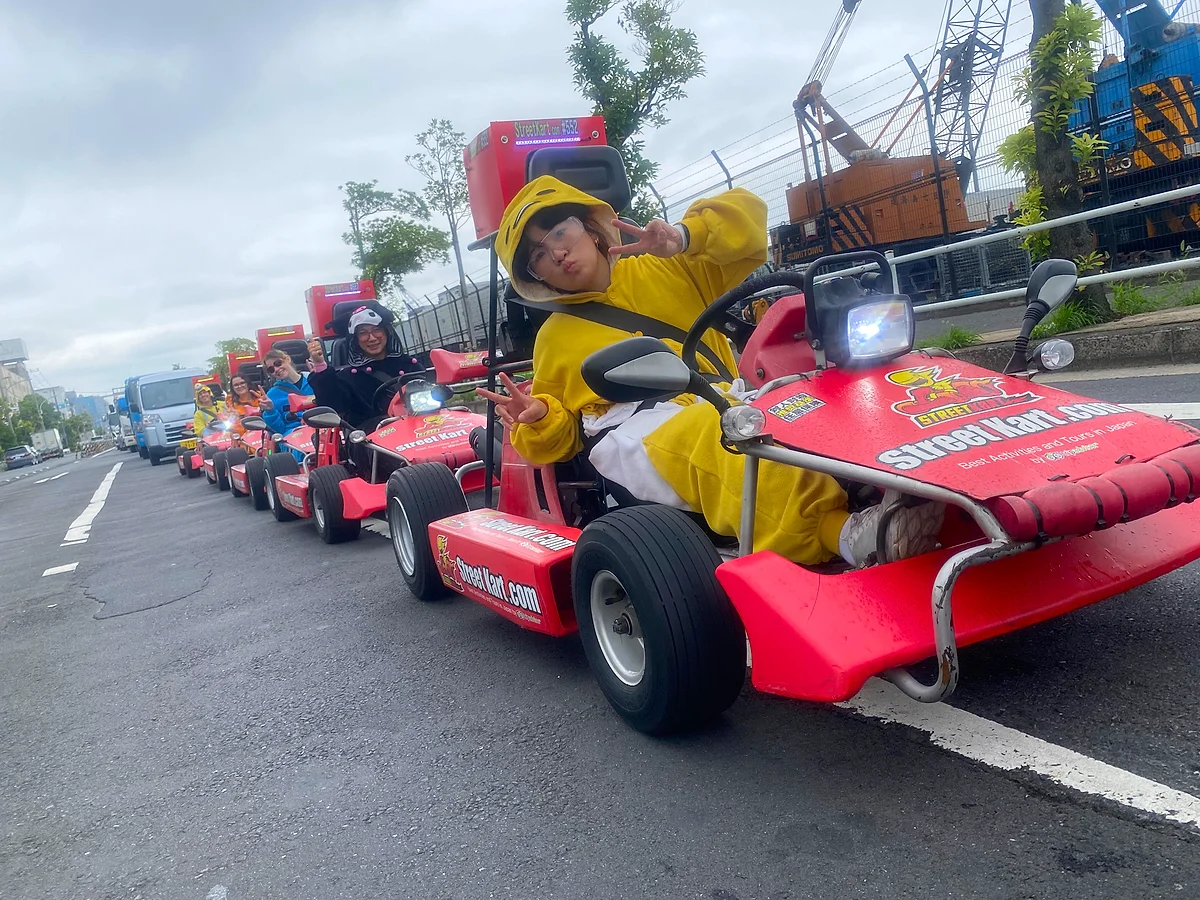
Tokyo's street karts give you this kind of "unchanging road." Each shop and course has a fixed tour route, and you drive it behind a guide. You can't take a detour on a whim. That rule might sound limiting, but it opens up a new way to enjoy the ride: you can drive the same road in different seasons and compare each trip with the last one.
What tends to worry people is the preparation. When your travel companions range widely in age and stamina, packing lists and things to check can grow without limit. This article sorts out, season by season, what you can cut and what you can't.
What do you notice when you drive the same route in different seasons?
Travel usually means going somewhere you haven't been before. With street karts, though, each shop and course has a fixed route. Please check the official website when you book to confirm whether you can drive the same route as last time.
At first I suspected it might feel a little unsatisfying. On second thought, it's close to a controlled experiment. You hold the conditions steady and change only the season, so the differences stand out clearly.
Because the first ride stays with you, you'll notice right away on the second one what has changed.
The rest of this article isn't about the karts themselves. It focuses on one thing: what to bring each season and what you can leave behind.
How much prep can you skip? What you can cut and what you can't
The trick to reducing prep isn't trimming a little from everything. It's deciding up front what can't be cut. Once that's settled, you can drop the rest without worrying.
Checking the participation requirements is the one thing you can never skip, whatever the season. How driver's licenses are treated and what's required to take part can vary by country and license type. This article can't promise that any one document will be enough.
Everyone who plans to drive should read the official page on driver's licenses once before the trip. For age and other requirements, please check the official website for details.
A group with a wide range of ages and stamina can save effort by having one person read the page and pass the key points to everyone. Just don't leave it at "it's probably fine." Send the official link to everyone, so each person can check it for themselves in the end.
Weekends fill up fast, so if you want to drive on a Saturday or Sunday, book early. Reservations are accepted through Facebook, LINE, and email. Check the Street Kart official website for contact details and the latest booking methods.
If you're already thinking "same road, another season," talk about roughly when you'll come back while you're on the train home from the first ride.
For details on how groups are formed and how the ride itself works on the day, it's reassuring to check the official website when you book.
This article can't say for certain whether tours run in the rain or how they change if they do. Please check the policy on the official website. On top of that, look at the weather forecast the day before and on the morning of the tour. Whatever the season, that's one habit worth keeping.
The biggest thing you can cut is travel by car. The shops have no parking, so decide from the start that you'll come by public transit.
As for walking distance from the station: the Shinagawa shop is 3 minutes from Kita-Shinagawa Station, the Shibuya shop and Shibuya Annex are 5 minutes from Shinsen Station, the Tokyo Bay shop is 8 minutes from Shin-Kiba Station, and Akihabara Shop No. 1 is 3 minutes from Suehirocho Station.
You can pack light too. Every shop has a restroom, and Wi-Fi is available inside. There's a 7-Eleven, FamilyMart, and Lawson within a 5-minute walk of each shop. Small things like drinks can be bought on-site, so there's no need to haul a big bag around.
Before buying any special clothing, read the dress guidelines on the official website first. That will tell you whether the clothes you already own will do. You can make a shopping list after that.
Each season: what to add, and what to leave off
Now for the seasons. First, a caveat: the official website's dress guidelines come first, and what I write here is only personal advice layered on top. How a season feels also varies a lot from year to year and day to day, so I can't say "in this month, do this." Make your final call after checking the forecast for the day.
Some basics apply in every season. Choose clothes that are easy to move in and won't get in the way of driving. Wear closed-toe shoes, such as sneakers. Avoid sandals, heels, skirts, and dresses. Also leave behind anything that can billow in the wind or catch on something, like a long scarf. Seasonal tweaks are just additions and subtractions on top of these basics.
Tokyo's spring air can feel completely different between morning and midday on the same day. It's not unusual to feel warm in the sun and then suddenly chilly the moment you turn onto a windy main street.
If you want to cut prep, layering thin jackets is easier than bringing one heavy coat. Take one off when it's hot, put one on when it's cold, and that's that.
On Omotesando, which the Shibuya shop's route passes through, the fresh leaves of the zelkova trees catch your eye. Trees that were bare branches in winter look completely different in the same spot. It's a small way to check your answers, reserved for those riding a second time or more.
Tokyo summers are harsh, and even in September some days feel like the middle of summer. Leave the assumption "it's autumn now, so it should be cool" at home.
Summer is not the season to cut back on prep. If anything, this is the one season not to cut corners.
Drink plenty of water before the tour. It also helps to know where the convenience store near the shop is, so you can rehydrate right after. While you're driving, your hands stay on the wheel, so take care of drinks before and after the ride.
For the sun, a thin, breathable long-sleeve layer turns out to be surprisingly useful.
On the Tokyo Bay shop's route, you'll catch the sea breeze along the Shin-Kiba bayside roads and around the Rainbow Bridge. But a cool breeze doesn't mean the sun is any weaker. Don't let the pleasant feeling make you careless.
For a group with a wide range of ages and stamina, plan around the person who handles heat the worst, especially in summer. Depending on how someone feels that day, sitting out and waiting instead of driving is a perfectly sensible choice.
Autumn brings more comfortable days for driving. At the same time, you can feel the days getting shorter. Even if you set off at the same time of day, the sky is a different brightness in summer and in autumn. If you go by your summer memory and assume "it'll still be light," you may be a little surprised at how early it gets dark.
As for prep, being able to add one more layer to clothes that are comfortable at midday is enough.
If you ride when the Omotesando zelkovas are changing color, you can compare them with the fresh leaves you saw in spring. The timing of the autumn colors shifts from year to year, so check how Omotesando is looking before you go.
Winter prep is almost entirely about the wind.
For your neck, something like a neck warmer that won't flap in the wind works better than a long scarf. For gloves, choose thin ones that let you grip the wheel firmly. Gloves that are too thick can dull your feel for driving.
Omotesando is also known for its winter illuminations. Whether they happen in a given year, and when, changes every year. If you want to time your tour to them, check the announcements before making plans.
The Rainbow Bridge, visible on the Tokyo Bay shop's route, lights up in seven colors at night. In the short-day season, you may end up driving through the scenery after dark. Check the official website for available departure times.
Keeping it easy for everyone in a group of mixed ages and stamina
This is probably the part I most want to get across.
A street kart is a vehicle each person drives alone. There are no passengers, so nobody can sit next to someone else and just enjoy the view. If someone in your group won't be driving, decide in advance how they'll spend that time. That's the shortest path to everyone getting through the day comfortably.
The tour follows a fixed route behind a guide. It's best to assume that anyone waiting will be on their own until the tour ends. With that in mind, here are a few places to wait near each shop. None of them are on the tour routes. They're places to drop by before or after the experience, or while waiting.
Near the Shinagawa shop, Shinagawa Shrine, which has a Fujizuka (a miniature Mount Fuji mound), is about a 5-minute walk away. You could also take a slow stroll through the old-fashioned Kita-Shinagawa shopping street.
Near Akihabara Shop No. 1, Kanda Myojin Shrine is about a 10-minute walk away. If you'd rather settle in and wait, Starbucks Akihabara Ekimae is another option.
From the Shibuya shop and Shibuya Annex, Shibuya Hikarie is about a 10-minute walk.
For the Tokyo Bay shop, there's CASICA, a cafe and restaurant, in the Shin-Kiba area.
Check each place's hours for the day you're going.
A word on language as well. Guidance on tour day is basically given in English. Whether you can get guidance in Japanese or other languages depends on the staff that day and can't be guaranteed. If someone in your group isn't comfortable with English, prepare ahead instead of waiting until the day. The website supports 22 languages, so have them read the safety notes in advance in whichever language is easiest for them.
How each shop's scenery changes with the seasons
There are 9 shops nationwide: 7 in Tokyo, 1 in Osaka, and 1 in Okinawa. Note, however, that Akihabara Shops No. 1 and No. 2 are in nearly the same spot, and so are the Shibuya shop and Shibuya Annex. They aren't spread across seven separate areas, so don't be misled.
If you plan to drive the same road in different seasons, start by deciding which shop's route to take. Please check the official website when you book to confirm whether you can drive the same route as last time.
The Tokyo Bay shop's route includes the Rainbow Bridge, Tokyo Tower, the Shin-Kiba bay area, and the Odaiba area. The red-and-white steel frame of the 333-meter Tokyo Tower looks different depending on the color of the sky.
The Akihabara shops' route passes the Marunouchi building of Tokyo Station and Ginza. The red-brick station building, opened in 1914, shows different shades of brick as the angle of the light changes with the seasons. In Ginza, the Wako clock tower at the 4-chome intersection is a landmark.
The Shibuya shops' route includes the Shibuya Scramble Crossing, Harajuku's Takeshita Street, and Omotesando. As this article has mentioned several times, the zelkova trees of Omotesando are a great place to see the difference between seasons.
The Shinagawa shop's route runs around Shinagawa Station, the Takanawa area, and the Shibaura, Tamachi bay area. Tokyo Tower and the Rainbow Bridge in the distance look different depending on how clear the air is. On a clear winter day and a hazy spring day, even the same view should feel like it sits at a completely different distance.
Decide on your next season now
The way to think about reducing prep is actually very simple.
Participation requirements, booking, and weather: check these three properly every time. Beyond that, you can let go of the car, the big bags, and the "just in case" shopping. What you adjust each season is one extra layer and your protection against heat or wind. If someone in your group won't be driving, decide in advance where they'll wait.
Once you've been through this process, your prep for the second trip should be even shorter.
When you drive the same road a second time, you see the scenery layered over your memory of the first. The trees that were fresh green may have changed color, or the hour that was bright may now be turning to dusk. Having driven the same road before is what lets you notice those differences.
First, check the participation requirements, dress guidelines, and booking methods on the Street Kart official website. If you want to drive on a weekend, book early. And once you've finished your first ride, decide on the way home which season you'll come back in.
The zelkovas will probably be waiting for you.
This article was originally written in Japanese and translated using AI. Some expressions may read unnaturally, and we appreciate your understanding. For the most accurate and up-to-date information, please refer to the official site at kart.st.
Street Kart is not affiliated with Nintendo or the Mario Kart series in any way. We do not provide costumes of Nintendo characters, and such costumes may not be worn during tours even if brought by participants.